
Why Landscape Management Plans Are Key to Long-Term Sustainability
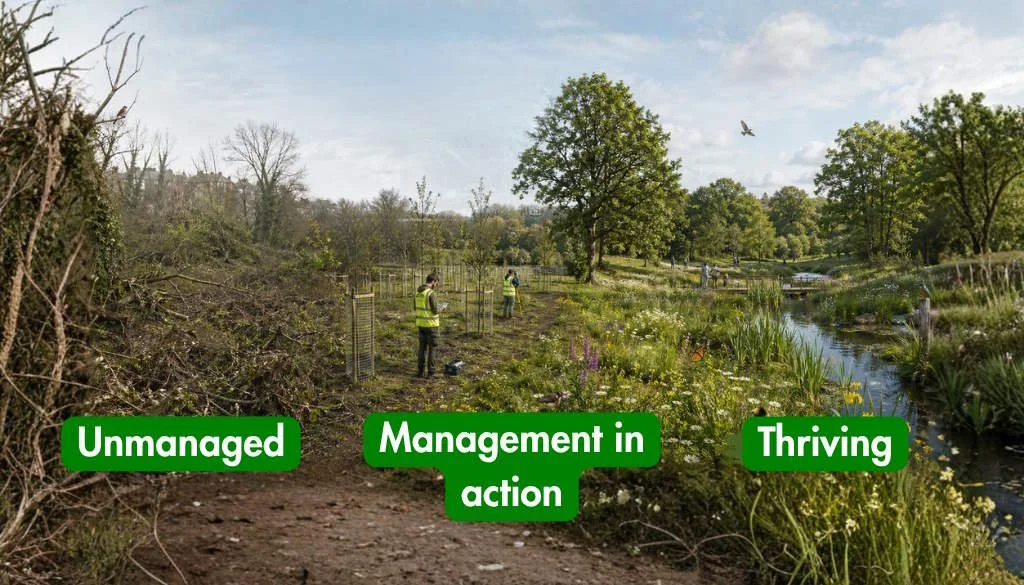
Landscape management is no longer just about maintaining the appearance of green spaces. In an era of accelerating environmental change, biodiversity loss, and increasing development pressure, landscape management plans have become essential tools for ensuring long-term ecological resilience and sustainability. For organisations, developers, and landowners, these plans provide a structured, science-led framework to protect and enhance landscapes over time.
By integrating ecological understanding, long-term monitoring, and adaptive management, landscape management plans help ensure that outdoor environments continue to deliver ecological, social, and environmental value well into the future.
This article explores why these plans are so important, how they work, and the critical role played by landscape planners, ecological surveys, tree preservation, and ecological assessments in shaping sustainable landscapes.
What Is a Landscape Management Plan?
A landscape management plan is a strategic document that sets out how a landscape will be managed, maintained, and enhanced over time. Unlike basic maintenance schedules, these plans are long-term, adaptive, and rooted in ecological evidence.
They typically include:
Baseline ecological surveys
Habitat and species management strategies
Tree and vegetation management, including tree preservation
Monitoring and review frameworks
Objectives for biodiversity enhancement and sustainability
As ecological consultancy practice shows, these plans are designed not only to maintain landscapes but to improve their ecological condition over time through informed intervention and monitoring.
In essence, they act as a bridge between landscape design and ongoing ecological stewardship.
Why Long-Term Sustainability Depends on Planning
Landscapes are dynamic systems. They evolve due to natural processes, climate influences, and human activity. Without structured management, even well-designed landscapes can degrade over time, leading to habitat loss, reduced biodiversity, and ecological imbalance.
Research in landscape ecology highlights that sustainable landscape management must consider long-term interactions between land use, ecological structure, and ecosystem services.
A landscape management plan ensures that:
Ecological goals are not lost after construction or development
Habitats are maintained and enhanced over time
Biodiversity is protected through active management
Environmental impacts are continuously assessed and mitigated
This proactive approach is essential for achieving genuine sustainability rather than short-term visual improvement.
The Role of Landscape Planners in Sustainable Management
Landscape planners play a crucial role in developing and implementing landscape management plans. Their expertise sits at the intersection of ecology, design, and environmental policy.
They are responsible for:
Translating ecological data into practical management strategies
Ensuring compliance with environmental legislation
Integrating biodiversity objectives into land-use planning
Designing adaptive management frameworks that evolve over time
Modern landscape planning increasingly adopts a systems-based approach, recognising landscapes as interconnected ecological and social systems. This allows planners to manage land not as isolated sites, but as part of wider ecological networks.
The Importance of Ecological Surveys
A high-quality ecological survey is the foundation of every effective landscape management plan.
These surveys assess the existing ecological conditions of a site, including:
Habitat types and quality
Presence of protected or notable species
Vegetation structure and condition
Ecological connectivity with surrounding habitats
The data gathered informs all subsequent management decisions. Without this baseline understanding, it is impossible to design meaningful conservation or enhancement strategies.
Ecological surveys also help identify opportunities for habitat creation, restoration, or enhancement, ensuring that management actions are targeted and effective.
Ecological Assessments: Understanding Environmental Impact
Alongside ecological surveys, ecological assessments evaluate how a site and its management may affect biodiversity over time.
These assessments are often required during planning applications to determine whether proposed developments could impact protected species or habitats. They help ensure that ecological considerations are embedded into decision-making from the outset.
Key components include:
Assessment of potential habitat loss or disturbance
Evaluation of species sensitivity
Identification of mitigation measures
Recommendations for enhancement or compensation
In landscape management planning, ecological assessments ensure that sustainability is not just a goal, but a measurable outcome.
Tree Preservation, Biodiversity, and Long-Term Landscape Health
Trees are a cornerstone of healthy landscapes, delivering far more than visual value. They provide essential ecological benefits such as habitat creation, carbon storage, microclimate regulation, and improved air quality, while also strengthening the character and resilience of both urban and rural environments. However, without long-term management, trees can be vulnerable to disease, poor planting design, and development pressure.
This is where tree preservation strategies within landscape management plans are essential. They ensure trees are not only protected but also integrated into wider ecological objectives that support long-term landscape health.
Key measures include:
Protection of mature and veteran trees with high ecological value
Appropriate pruning and ongoing maintenance to support tree health and safety
Root protection during construction to prevent long-term damage
Succession planting to ensure continuity of canopy cover
These approaches are vital for maintaining ecological continuity, particularly in changing or developing landscapes. Mature trees often support complex ecosystems that cannot be easily replaced, making their protection a priority in sustainable landscape planning.
Beyond trees, landscape management plans also play a crucial role in supporting biodiversity and local wildlife. They enhance and connect a range of habitats that support species such as birds, pollinators, small mammals, amphibians, reptiles, and native plants. By maintaining a mix of woodland, grassland, wetlands, and hedgerows, these plans create resilient ecosystems that support a wide variety of species. This habitat diversity is key to ecological stability, as different species depend on different environmental conditions to thrive.
Why Landscape Management Plans Matter More Than Ever
With increasing pressures from habitat fragmentation, urban expansion, and climate change, structured ecological planning is more important than ever. Landscapes are constantly changing, and without long-term management, even well-designed sites can quickly lose ecological value.
Landscape management plans provide a clear framework for maintaining, enhancing, and monitoring landscapes over time. They ensure that environmental objectives set at the design stage are carried through into long-term, measurable outcomes.
Key benefits include:
Long-term ecological direction that supports sustainability
Evidence-based decisions informed by ecological surveys and assessments
Protection and enhancement of biodiversity, habitats, and ecosystems
A structured approach to sustainable land stewardship and adaptive management
By embedding these principles into ongoing management, landscape management plans ensure landscapes continue to deliver ecological and environmental benefits for decades.
Rather than treating landscapes as static spaces, they recognise them as living systems requiring continuous care and adaptation. This integrates landscape planners, ecological surveys, tree preservation strategies, and ecological assessments into a coordinated approach that supports long-term biodiversity.
For organisations such as Lizard Landscape Ecology, these plans are a key tool in creating resilient, sustainable landscapes that benefit both people and nature.
